






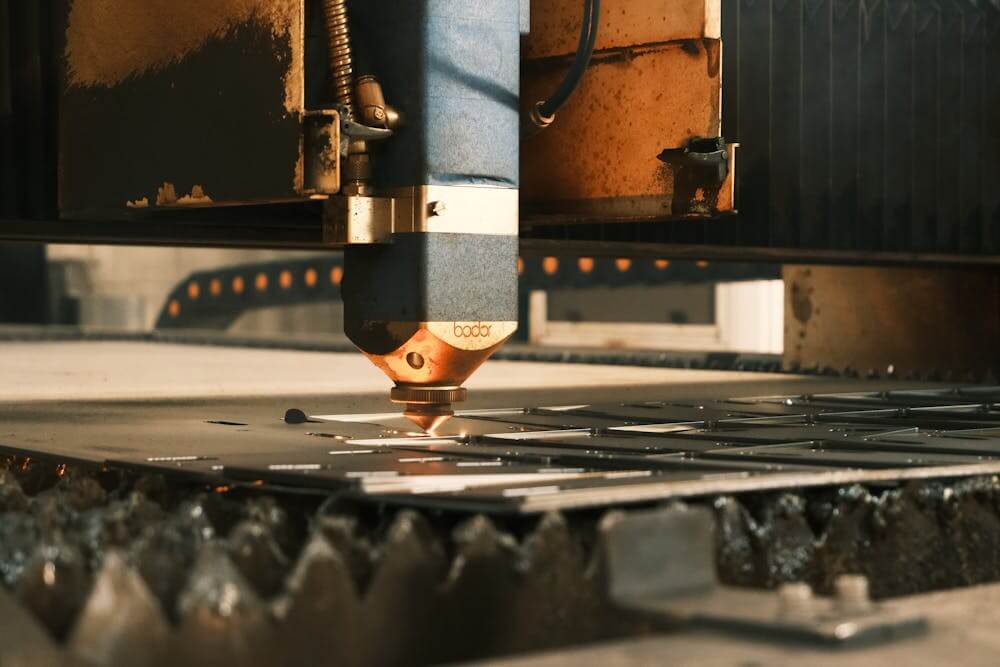

Laser welding has quickly become one of the most valuable techniques in modern fabrication thanks to its precision, speed, and ability to join metals with minimal distortion. But despite how effortless the process may look from the outside, the reality is far more complex. The same power that enables flawless seams also introduces risks most first-time users underestimate.
- Why the Laser Beam Is Dangerous — More Than Just Bright Light
- The Multi-Layered Safety Strategy: Why “Just Wear Goggles” Isn’t Enough
- Engineering Controls: Built-In Safeguards in Laser Systems
- Administrative Controls: Work-Zone Management & Protocols
- Personal Protective Equipment (PPE): The Essential Last Line of Defense
- Eye and Face Protection
- Skin, Clothing, and Physical Protection
- Ventilation, Fume Control, and Respiratory Protection
- Safe Operation Practices: How Operators Keep Control
- Pre-Operation Checks and Setup
- Beam Alignment and Welding Protocols — Why You Cannot Rely on “Point and Shoot.”
- Post-Operation and Maintenance Safety
- Why “Just Point and Weld” Is a Dangerous Myth
- Role of Professional-Grade Systems in Safer Welding
- Conclusion
When you work with a laser welder, you’re dealing with a tool capable of delivering concentrated energy at levels high enough to burn, blind, ignite, or vaporize materials instantly. That’s why “just point and weld” is a myth — and a dangerous one. Safe laser welding demands strict controls, proper protective gear, and disciplined procedures that keep both operators and bystanders safe during every step of the process.
This guide breaks down what makes laser beams hazardous, how operators maintain safe control, and why responsible practices matter just as much as technical skill.
Why the Laser Beam Is Dangerous — More Than Just Bright Light
Invisible Radiation & Eye/Skin Risks
Unlike arc welding, laser welding often uses infrared or near-infrared wavelengths that are completely invisible to the human eye. That means you can’t rely on sight to detect beam direction or intensity. Even a brief exposure — direct or reflected — can cause irreversible eye damage in milliseconds. Reflections from metal surfaces make the threat even more unpredictable. In addition, exposed skin is vulnerable to burns from both the beam and the radiant heat it produces.
Fumes, Heat, Fire, Electrical, and Plasma Hazards
When the laser interacts with metal, it superheats the material so quickly that it vaporizes, creating plasma, fumes, and ultrafine particulates. These airborne byproducts can pose serious inhalation hazards if not extracted properly.
Intense localized heat can ignite debris, coatings, or flammable materials in the welding area. Combine that with high-voltage power supplies, cooling systems, and precision optics, and you get a process that requires respect, awareness, and strict precautions.
The Multi-Layered Safety Strategy: Why “Just Wear Goggles” Isn’t Enough
Engineering Controls: Built-In Safeguards in Laser Systems
Safe operation begins long before you put on protective equipment. Modern systems use engineering-level protections, such as:
- Enclosed work cells or beam chambers that physically contain the laser.
- Door interlocks that instantly disable the beam if the enclosure is opened.
- Emergency stop systems to kill power during faults, overheating, or system errors.
- Beam shutters that block output until the system confirms safe operating conditions.
These features exist because PPE alone is not enough. Without engineering controls, accidental exposure would be almost guaranteed.


Administrative Controls: Work-Zone Management & Protocols
Even with built-in safety mechanisms, operators must follow strict administrative safeguards, including:
- Establishing a Laser Controlled Area (LCA) where only trained personnel are allowed.
- Using hazard signage and clear entry restrictions.
- Follow standard operating procedures for alignment, maintenance, and emergency shutdown.
- Having a Laser Safety Officer (LSO) oversee compliance and documentation.
These measures reinforce consistency, reduce human error, and prevent unsafe improvisation.
Personal Protective Equipment (PPE): The Essential Last Line of Defense
Eye and Face Protection
Laser-rated glasses and welding helmets must match your system’s wavelength and optical density requirements. Standard welding helmets offer no protection against infrared laser beams — making them dangerously insufficient. When the laser is active, everyone inside the hazard area must wear certified eye protection.
Skin, Clothing, and Physical Protection
Flame-resistant clothing, heat-resistant gloves, and full-coverage attire protect against sparks, radiant heat, and molten metal. Operators should also avoid reflective jewelry, which can redirect the laser in unpredictable and hazardous ways.
Ventilation, Fume Control, and Respiratory Protection
Extracting metal fumes and particulates is mandatory — especially when welding coated, galvanized, or alloyed metals. Depending on the workspace, this may include:
- Local exhaust ventilation (LEV)
- Fume extractors
- Downdraft tables
- High-efficiency filters or respirators
Proper fume control protects both operator health and equipment longevity.
Safe Operation Practices: How Operators Keep Control
Pre-Operation Checks and Setup
Before activating a laser welder, operators must verify:
- Enclosures and interlocks are functioning
- Cooling and ventilation systems are active
- Work materials are stable and free of flammable contaminants
- Beam paths are clear and controlled
Skipping these steps is one of the most common causes of preventable accidents.
Beam Alignment and Welding Protocols — Why You Cannot Rely on “Point and Shoot.”
Beam alignment is always performed at low power or with a safe target. Operators follow marked paths, precise positioning tools, and validated motion programming (for automated systems) to prevent stray beams or misalignment.
“Point and weld” fails because:
- Laser beams reflect unpredictably
- Slight misalignment can cause serious injury
- Weld quality depends on controlled motion and specific angles
- The beam is often invisible
Precision control is not optional — it’s the foundation of both safety and weld integrity.
Post-Operation and Maintenance Safety
After welding, safe workflow continues:
- Allowing parts to cool before handling
- Inspecting optics, cables, nozzles, and containment barriers
- Clearing debris and extracted particulates
- Verifying proper system shutdown
Neglected maintenance often leads to hidden hazards such as damaged optics, degraded exhaust systems, or compromised enclosures.
Why “Just Point and Weld” Is a Dangerous Myth
Laser welding is powerful, but also unforgiving. Even momentary carelessness can cause harm. The myth of casually aiming and firing the beam ignores:
- Invisible energy that can instantly blind
- Reflections that travel in unpredictable directions
- Toxic fumes are produced during welding
- Heat that can ignite nearby materials
- High-voltage components requiring stable cooling and monitoring
Safe welding depends on controlled environments, disciplined procedures, and constant awareness — not on intuition or guesswork.
Role of Professional-Grade Systems in Safer Welding
Before the conclusion, it’s worth noting that modern laser welding platforms continue to evolve with built-in safety layers, smarter controls, and improved enclosure systems. Providers like Denaliweld design their equipment to support responsible, stable, and predictable operation — helping welders maintain consistency while reducing exposure to hazards when used correctly.
These advancements don’t replace safety training, but they complement it and support safer workflows for professionals and newcomers alike.
Conclusion
Laser welding delivers unmatched precision, speed, and versatility — but those advantages come with real risks. You can’t simply “point and weld,” because the invisible power of a laser welder demands strict control, proper gear, and adherence to safety protocols.
By combining engineered safeguards, administrative controls, disciplined operating procedures, and proper PPE, you create an environment where high-quality laser welding can happen without compromising operator safety. When you respect the beam and follow best practices, you unlock the full capabilities of laser welding while protecting both people and equipment.