






Most independent shops already know their best customers by sight. The problem is that a smile at the till does not tell you how often someone comes back, what they spend, or when they quietly stopped visiting. A well-run loyalty card scheme turns that instinct into something you can measure, and it does so without the cost or complexity of a branded app.
Here is how to set one up so that customers actually use it, and so that it pays for itself.
Start with a reward people understand in five seconds
The schemes that work are the ones a customer can explain to a friend: “buy nine coffees, the tenth is free”, “spend £100, get £10 off”. Points systems with conversion tables and expiry rules lose people at the counter. Pick one simple mechanic, write it on the card, and make the reward feel close: if your average customer visits twice a month, a reward that takes a year to reach will not change behaviour.
A useful rule of thumb is to set the reward at around 5 to 10 per cent of what a customer spends to earn it. That is generous enough to notice and modest enough to protect your margin.
Choose the card format that matches your till
There are two common formats, and the right one depends on how you want to track visits.
Stamp cards are the simplest option. Staff stamp or punch the card at each visit, and there is nothing to install. They suit cafés, bakeries, hairdressers and small retailers with a single site. The weakness is that you learn nothing about who is using them, and a lost card means lost progress.
Numbered cards with a barcode or QR code link each card to a customer record in your point-of-sale or loyalty software. Every scan is logged, so you can see visit frequency, spot customers who have lapsed, and run a targeted offer to bring them back. Most modern tills and tablet POS systems can read a standard barcode with the scanner you already have, so the step up is smaller than many owners think.
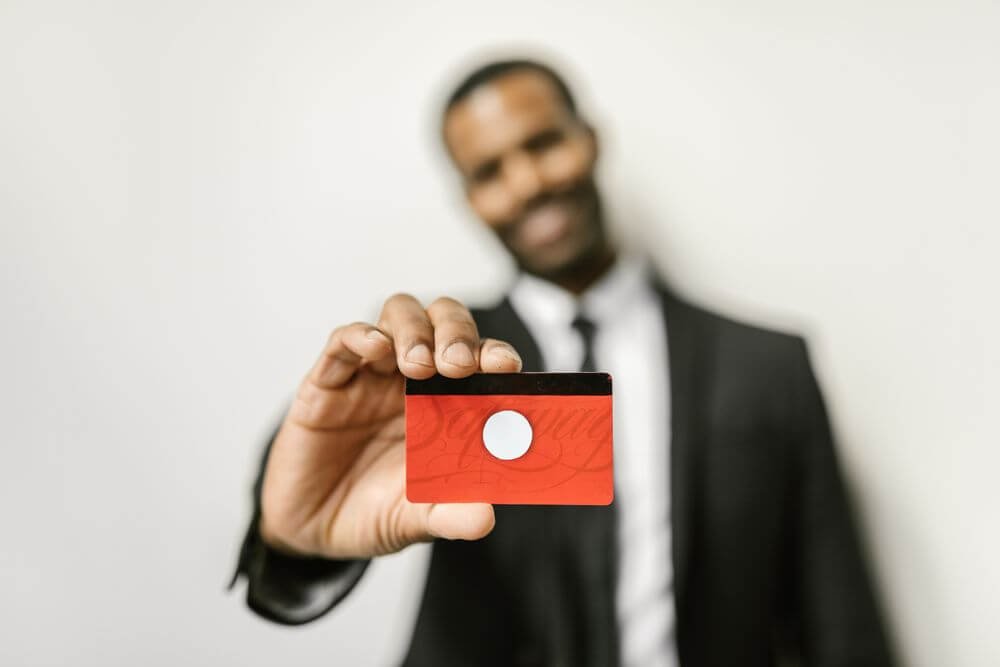
Whichever you choose, print the card on durable material. A paper card that frays in a wallet after three weeks sends the wrong message about the scheme and about your brand. Plastic cards the size of a bank card (85.6 × 54 mm) live alongside payment cards and are far more likely to be in the customer’s pocket when they reach your counter. If you are comparing options, specialists in custom loyalty cards can print stamp boxes, a unique number or a barcode on each card in the same run.


Design the card as part of your brand
The loyalty card is one of the few pieces of your brand that a customer carries every day. Use your logo and colours, keep the reward rule on the back in large type, and leave space for the customer’s name if you want the card to feel personal. If you scan barcodes, keep the code on a white background with a clear margin around it, and test a printed proof with your own scanner before ordering the full run.
Launch it properly at the counter
Most schemes fail quietly because staff forget to offer the card. A few habits make the difference:
- Offer the card at every first purchase, with one sentence explaining the reward.
- Give a head start: one stamp or a small number of points on day one makes customers more likely to complete the card.
- Display the offer at the till and on your shop window so customers ask for it.
- Keep a stock of cards at each till point, not in the back office.
Measure what the scheme is doing
After three months, look at a few simple numbers: how many cards have been issued, how many are scanned or stamped more than once, and how many rewards have been redeemed. If cards are issued but rarely reused, the reward is probably too far away or not visible enough. If redemptions are high and average spend has risen, the scheme is doing its job.
Barcode cards make this much easier, because the data is already in your system. You can identify regular customers who have not visited for six weeks and send them a reason to return, which is usually the most profitable sale a small business can make.
Keep it simple, keep it physical, keep it visible
A loyalty scheme does not need to be sophisticated to work. A clear reward, a durable card that customers keep, and staff who offer it every time will do more for repeat business than any complex points system. Start small, measure the results, and adjust the reward once you know how your customers respond.